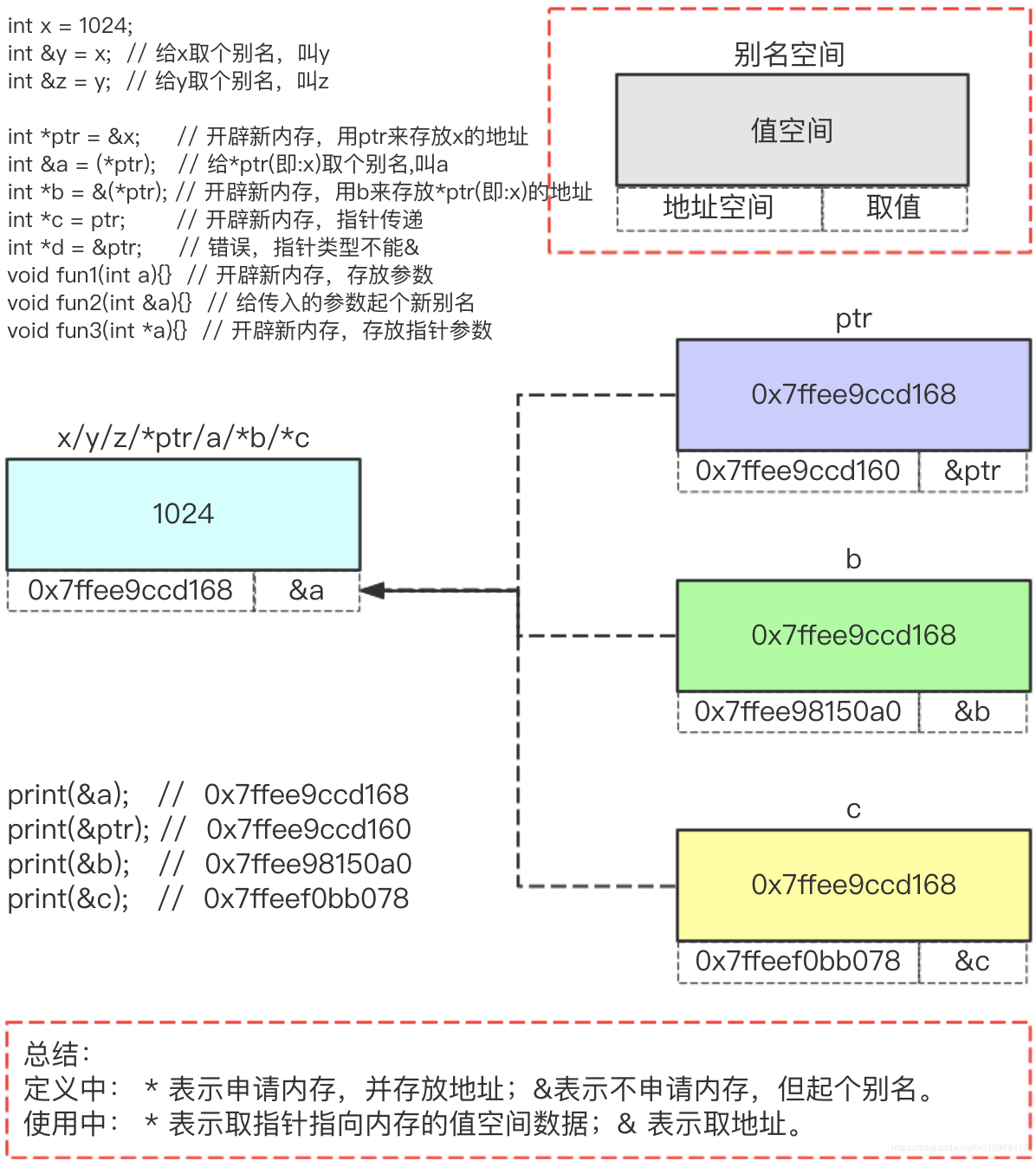
1. 实现 C++ string 类1.1 C++ 中动态内存管理1.2 深拷贝和浅拷贝1.3 运算符重载1.4 移动语义与右值引用1.5 智能指针 参考链接 12345678910111213141516171819202122232425262728293031323334353637383940414243namespace W{class String {public: size_t capacity; char* _str; size_t _size; //构造函数 String(const char* str = "") { _size = strlen(str); capacity = _size; _str = new char[_size + 1]; // 多开一个空间,用来存放 '\\0' strcpy(_str, str); } //默认构造函数,浅拷贝,两个对象指向同一块内存 String(const String& s) { _str = s._str; _size = s._size; capacity = s.capacity; } String& operator=(const String& s) { if (this != &s) { delete[] _str; capacity = s.capacity; _size = s._size; _str = new char[capacity + 1]; strcpy(_str, s._str); } return *this; } //赋值运算符返回的是引用,因为可以连续赋值 //深拷贝,两个对象指向不同的内存,避免浅拷贝的问题 ~String() { delete[] _str; _str = nullptr; _size = 0; capacity = 0; }};} 2. 其他要点 引用、指针、对象与地址的关系 *(待补充)